Small Businesses as First Responders
How Local Entrepreneurs Carried the Community Through Crisis
"I went over there and started to help my neighbors move their stuff… it was just fire everywhere."
When the Eaton wildfires tore through Altadena and surrounding communities, people did not wait for official instructions or relief portals to open. They went where they always go in moments of uncertainty — to the places and people they trust.
They went to their barbers and stylists. Their corner stores and cafés. Their wellness spaces and neighborhood shops. Across Altadena, Pasadena, Sierra Madre, and Northeast Los Angeles, small businesses became the region's earliest and most reliable responders, embedded in the daily life of the community and already positioned to act.
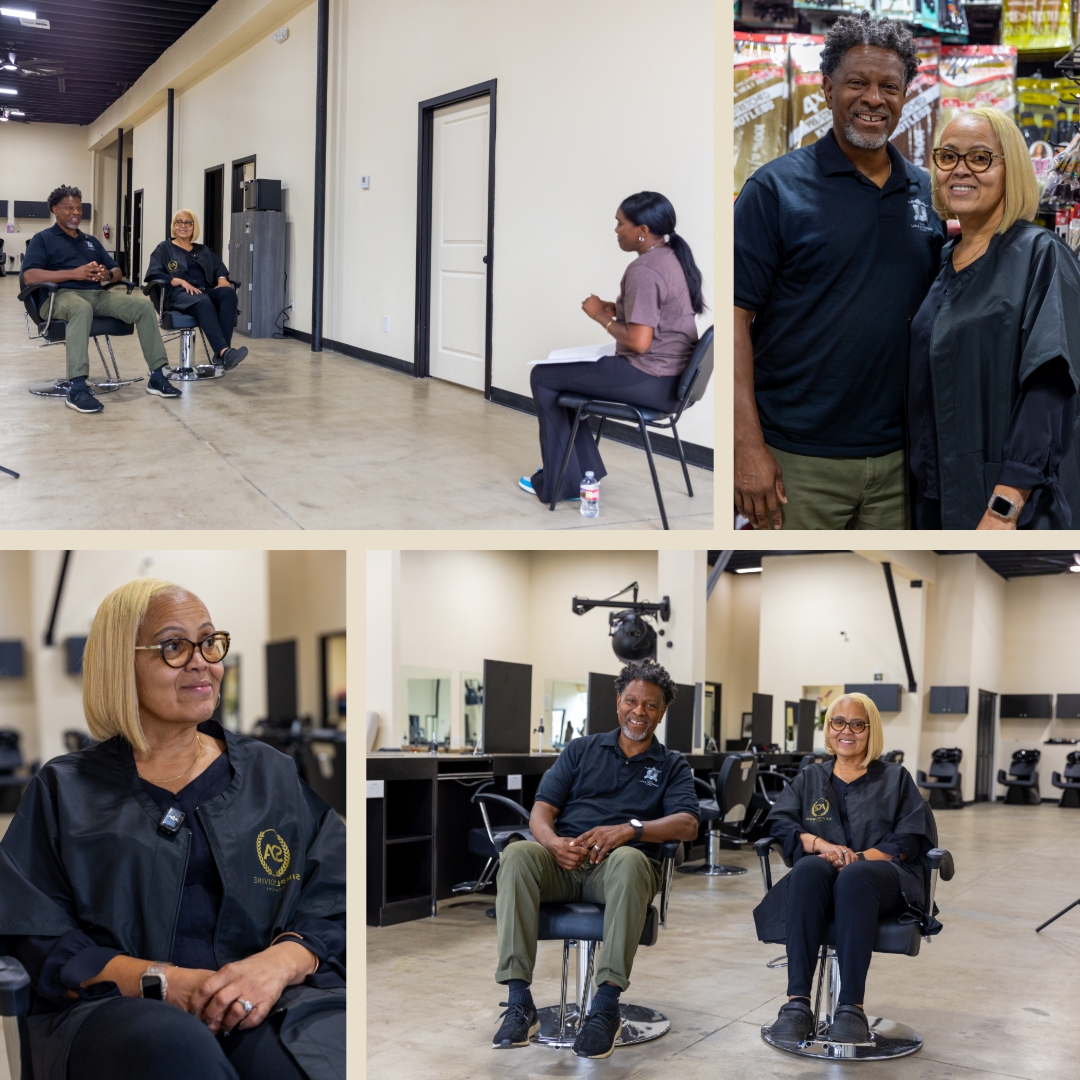
Owners unlocked their doors as ash settled outside. They cleared space for neighbors who needed clean air, charging outlets, water, or simply a moment to breathe. One business owner shared, "We actually hosted several community events where we were handing out clothes, handing out things for the personal needs of the clients and the people who lived here" (Dardin Beauty). Another described the instinctive nature of the response: "We are the heartbeat of Altadena that brings everyone together. I felt it was our responsibility to respond… to uplift. That's how it was from the jump." (Rhythm of the Village).
This response emerged from proximity, familiarity, and relationships built over years of showing up for one another.
In Altadena and Pasadena, those relationships run deep. This is a community where people know one another across generations — where families have built, worked, and cared side by side for decades. "Black Pasadena is small," one resident explained. "Everybody knows somebody." That closeness shaped how the crisis unfolded. Business owners checked on neighbors. Churches opened their doors. Informal networks became lifelines. What emerged was not just aid, but continuity — a collective commitment to face loss together rather than alone.
But this immediate activation came at a profound personal cost.
"In the midst of being in pain and hurt I have to set up a booth and sell merchandise when all of our merchandise was burned in the fire." - Rhythm of the Village
Many of the same business owners serving as community anchors were simultaneously navigating their own displacement, insurance delays, revenue loss, and emotional strain. "It took me into a steep depression… just seeing this thing that you built… and feeling like I was abandoning my clients." (Threo Skin). Another recalled peers reaching out while evacuating themselves: "My peers reached out to me right away as they were fleeing their own homes. They drove by my store and saw it in ashes. They said it would be okay and we would come back stronger" (Rhythm of the Village).
Again and again, a pattern surfaced: people recovering while holding everyone else up.
Many owners did not wait for roads to reopen or distribution sites to be established. They built their own networks overnight, moving supplies through friends, neighbors, and rideshare drivers. Essential items were passed hand to hand until they reached those most in need. When communication lines were down or neighborhoods were inaccessible, the people already on the ground became the only reliable source of immediate help.
Across interviews, the truth is unmistakable. Small businesses provided stability, leadership, and care in the most volatile moments — filling gaps formal systems could not reach in real time. Their rapid response was driven by trust, cultural alignment, and deep community ties.
Yet despite functioning as first responders, these entrepreneurs received little to no support for the essential roles they played.
Key Insights
- Over 90% of business owners activated immediately to provide tangible community support, often before formal aid systems arrived—while simultaneously absorbing economic losses, property damage, supply interruptions, and emotional trauma.
- About 82% of owners reported severe burnout, balancing community care with displacement, caregiving responsibilities, and financial instability.
- Approximately 69% experienced income loss during the same period they were providing community aid—absorbing financial strain while sustaining public-facing support.
- Informal, trust-based networks outpaced institutional aid in speed, accessibility, and relevance, particularly for residents excluded from formal recovery systems.
- Despite functioning as crisis-response anchors, most businesses received no formal compensation or recognition for the essential roles they played.
What This Reveals
This pattern is not unique to Los Angeles County. Research following Hurricane Katrina, the Tubbs Fire, and the Oregon wildfires shows the same dynamic: informal, community-led systems consistently outperform formal institutions in the earliest stages of disaster response — particularly in communities of color.
And yet, recovery infrastructure continues to overlook the very actors who stabilized communities when systems failed.
The result is a double burden: entrepreneurs absorbing trauma, burnout, and economic loss while being expected to lead recovery without support.
Key Recommendations for LA County
- 1. Establish a Community Recovery Navigator Corps — Embed trained, culturally rooted navigators within trusted community businesses to support FEMA and SBA applications, document recovery, coordinate resources, and provide real-time communication.
- 2. Develop Resilience Hubs Anchored in Local Storefronts — Resource selected businesses to operate as climate-response hubs offering clean-air refuge, charging stations, essential supplies, trauma-informed support, and business continuity assistance during emergencies.
- 3. Reduce Documentation and Eligibility Barriers — Adopt verbal or video-based applications, community verification of losses, simplified ID requirements, and streamlined documentation.
- 4. Reactivate Local Commerce Through Community-Led Events — Quarterly Altadena–Pasadena business fairs can rebuild customer traffic, restore visibility, and create consistent touchpoints between residents, navigators, funders, and small businesses.
- 5. Co-Design Capital Tools With Microbusinesses — Prioritize recovery tools that do not deepen debt. Recoverable grants, revenue-based financing, flexible repayment structures, and pooled funds better reflect the realities of microbusiness recovery after disaster.
Toward a Coordinated Recovery Ecosystem
The response to the Eaton Fire made one reality clear: recovery did not hinge on a single organization or program. It emerged from a broader ecosystem of community-rooted actors, small business support funds, civic agencies, and social-impact intermediaries—each contributing from a different position, yet collectively sustaining the region through crisis.
Small businesses functioned as first responders not because they were designated to do so, but because they were embedded in daily community life. Their ability to provide stability, care, and continuity was enabled by trust and proximity—but their capacity to sustain this role depends on the surrounding infrastructure.
For recovery to be equitable and durable, investment must follow this ecosystem logic. Funders play a critical role in resourcing flexible capital and place-based infrastructure. Government agencies are essential to integrating community-led models into formal recovery systems. Intermediary organizations and trusted local partners anchor these efforts on the ground—bridging lived experience with system-level decision-making.
Resilience is not built by asking already-burdened entrepreneurs to carry recovery alone. It is built by aligning the capacities of the full network that stepped forward when formal systems lagged. Strengthening that coordinated capacity is the clearest path toward a recovery architecture that is inclusive, scalable, and rooted in local leadership.